Digital Cloth Printing Machine: How India's Textile Manufacturers Are Achieving More With Less
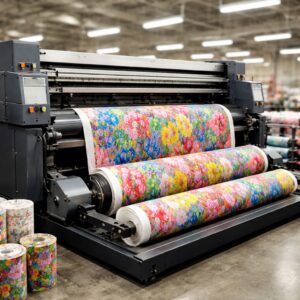
What if you could print any design, in any quantity, with less water, less waste, and less waiting?
A digital cloth printing machine makes that possible. Across India’s textile hubs — Surat, Tirupur, Jaipur, Ludhiana — businesses are shifting from traditional screen and rotary printing to digital cloth printing technology. The reasons are clear: better quality, faster delivery, lower costs on short runs, and sustainability credentials that export buyers increasingly demand.
This blog covers how digital cloth printing machines work, what makes them the right choice for India’s textile industry, and how Orange O Tec’s range of printers is designed for Indian production realities.
What Is a Digital Cloth Printing Machine?
A digital cloth printing machine is an inkjet-based industrial printer that applies colour and design directly onto fabric from a digital file. Unlike traditional methods that require physical screens or engraved rollers for each design, a digital cloth printing machine reads from a computer and outputs the design onto cloth with precision inkjet heads.
This eliminates the single biggest cost and time bottleneck in traditional textile printing — the screen/plate preparation stage — and opens up production possibilities that simply were not economically viable before digital technology.
How a Digital Cloth Printing Machine Works
- Design is created or imported digitally — any software, any complexity
- The file is processed through RIP (Raster Image Processing) software for print optimisation
- Fabric passes through the machine on a print belt or roller system
- Inkjet print heads apply ink with precision — one pass or single pass depending on machine type
- Post-processing (drying, steaming, or washing) completes the process based on ink type
With Orange O Tec’s Green Edge pigment inks, the post-processing stage is significantly simplified with minimal water usage required.
Single-Pass vs. Multi-Pass Digital Cloth Printing Machines
Single-Pass Machines
The fabric moves under a fixed print head array and is printed in one continuous pass. This is the fastest category of digital cloth printing machine. Orange O Tec’s Homer ‘Rocket’ uses this technology to deliver up to 60,000 linear metres per day — bringing industrial-scale speed to digital printing.
Multi-Pass (Scanning) Machines
The print head carriage scans back and forth across the fabric width multiple times to build the final image. Multi-pass machines offer very high resolution and colour precision — the preferred choice for fashion textiles, sarees, and high-end home décor fabrics where quality is the priority.
Sublimation Cloth Printing Machines
Sublimation machines print onto paper and transfer the design to polyester cloth under heat and pressure. The result is a fully embedded, wash-resistant, highly vibrant print. Standard for sportswear, swimwear, and promotional textile production.
Orange O Tec’s Homer ‘Rocket’ — India’s most powerful hybrid single-pass digital cloth printing machine. Up to 60,000 linear metres per day. The speed of industrial printing. The quality and flexibility of digital.
Orange O Tec Digital Cloth Printing Machines
Colorix — Precision and Quality
The Colorix is a direct-to-fabric digital cloth printer for manufacturers who prioritise print quality and colour accuracy. Compatible with reactive, acid, and pigment inks — ideal for fashion garments, sarees, dress materials, scarves, and home décor textiles.
Homer / Homer Rocket — Speed and Scale
The Homer series is Orange O Tec’s high-production digital cloth printer. From the standard Homer to the hybrid single-pass Rocket model, the Homer series delivers the throughput that large-scale operations require without sacrificing digital quality or flexibility.
MS Series — Reliability
The MS series brings proven European inkjet technology to Indian cloth printing. Valued for print head reliability, consistent ink delivery, and versatile ink compatibility — a trusted platform for manufacturers making their first major investment in digital cloth printing.
Key Benefits for Indian Manufacturers
- Zero screen or plate costs — each new design adds no extra setup expense
- Short run economics — profitable to print even 10 metres of a new design
- Faster delivery cycles — hours instead of days, critical for export deadlines
- Reduced water and chemical use — significant cost and environmental advantage
- Mass customisation — run 100 different designs in a single production shift
- Export market compliance — meets eco-standard requirements of EU and US buyers
- Single operator efficiency — one person can manage the full printing process
Frequently Asked Questions
Q1. Which digital cloth printing machine is best for cotton fabric?
A direct-to-fabric digital cloth printer with reactive or pigment ink is recommended for cotton. Reactive ink delivers the most vibrant, wash-fast results but requires steaming and washing. Orange O Tec’s Green Edge pigment inks offer a simpler process with less water — excellent for both fashion and home décor cotton printing.
Q2. Can a digital cloth printing machine replace rotary screen printing?
For high-volume runs of the same repeating design, rotary screen printing remains cost-competitive. For all other applications — short runs, multiple designs, fast delivery, custom orders — a digital cloth printing machine is faster, more flexible, and increasingly more cost-effective. Most modern manufacturers run both technologies side by side.
Q3. What is the running cost of a digital cloth printing machine?
Running costs include ink, energy, and maintenance. Ink cost per linear metre varies by design coverage, ink system, and fabric absorbency. Orange O Tec’s team can provide a detailed cost-per-metre analysis for your specific production. Contact info@orangeotec.com for a consultation.
Q4. How do I maintain a digital cloth printing machine?
Key tasks include daily printhead cleaning, regular ink system checks, belt/roller cleaning, and periodic calibration. Orange O Tec provides comprehensive operator training, a dedicated service team, and genuine spare parts support across India from its Surat base — ensuring maximum uptime.
Q5. Is a digital cloth printing machine a good investment for a new business?
Yes. For most new textile printing businesses, digital cloth printing machines offer a lower entry barrier than traditional screen printing, greater flexibility to serve diverse customers, and alignment with where the market is heading. Orange O Tec offers machines at multiple price points suitable for new entrants. Contact the team to discuss the right starting configuration.
Conclusion: Digital Cloth Printing Machines Are Reshaping Indian Textile Production
Every week, more manufacturers in Surat, Tirupur, Jaipur, and across India’s textile clusters are making the switch. The economics are clear, the quality is proven, and the sustainability advantage is fast becoming a commercial necessity.
Orange O Tec delivers advanced digital textile printing solutions with high-speed printers, eco-friendly inks, and trusted service — driving innovation and sustainability across India’s textile industry.
📞 info@orangeotec.com | +91 7486032990