MAS Vertical
One Fabric. Two Sides. Infinite Possibilities
Key Specification
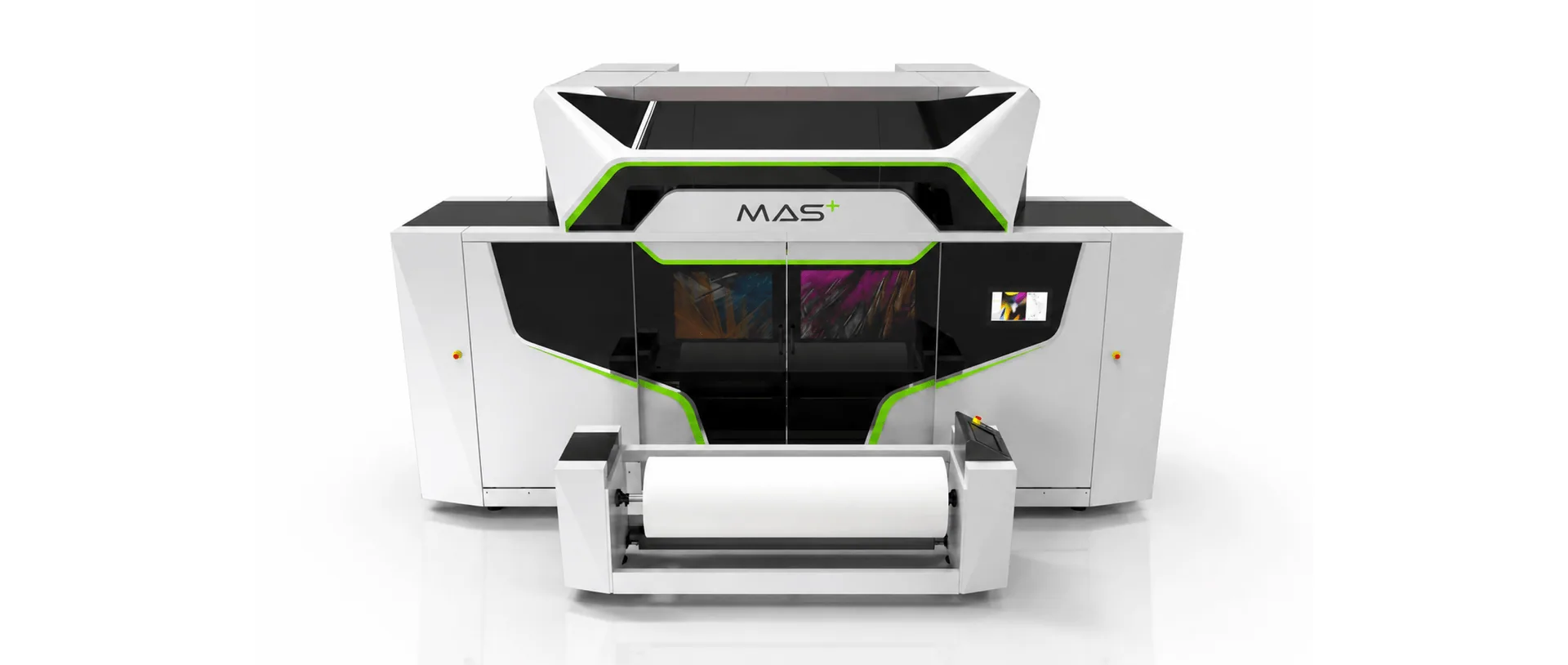
Synchronized double-sided digital textile printing engineered for perfect front-to-back registration, yarn-dye replication, and high value-added production across both fabric faces in a single pass.
Printing Width
Min 900 mm – Max 1850 mm
Head Type
Kyocera KJ4B 600 DPI
Number of Carriages
2
Installed Colors
Up to 8
Rear Side Drying Unit
IR Panel (9 kW)
Dual Side Drying Unit
Forced Air Heater (18 kW)
Maximum Operating Temperature
IR Panel (9 kW)
Sewing Machine
Optional
Centering Device
Optional
Image Processor
Built-in
Power Supply
400 V Triphase
Installed Power
44 kW
Pneumatic Pressure
6 bar
Maximum Compressed Air Consumption
20 l/min
Synchronized double-sided digital textile printing with dual-carriage Kyocera KJ4B printheads, real-time onboard image processing, dual-zone drying, and digital yarn-dye replication — built for reversible denim, yarn-dyed shirting, and value-added dual-design production.
Feature
Business Impact
2 synchronised carriages
Double-sided output in one pass, roughly halving machine time and handling
Up to 8 colours (4 per side)
Full colour on both faces, so neither side looks like the "back"
Kyocera KJ4B heads
Sharp stripes, checks and fine motifs over long runs
Dual drying zones
Prints dry before take-up, which prevents set-off and rejects
Printing the back of fabric usually means rewinding, flipping and reloading the roll, then trying to line up the second print with the first. MAS Vertical runs the fabric vertically between two print carriages, one on each side, and prints both faces at the same time in a single pass.
Because the fabric never leaves the machine and both carriages move in sync, front-to-back registration stays accurate. Two drying stages set both prints before take-up.
Print the same design on both sides for scarves, flags and curtains, or to replicate yarn-dyed checks and stripes. Print the same design in different colourways for reversible garments. Or print completely different designs on each face for reversible jackets, printed linings and denim with a printed inner face.
Which fabrics suit it?
Woven fabrics where both faces matter, especially shirting, denim, scarves and home textiles. We'll run samples on your fabric.
Which ink should I use?
Reactive or pigment for cotton, disperse for polyester. Our team will configure inks for your fabric range.
How does the workflow run?
Load both designs as one job. The built-in image processor prepares them, the machine prints and dries both sides in line, and fixation follows your usual process.
Yarn-dyed shirting: printed checks and stripes that look woven from either face, taking new designs to market in days instead of months. Reversible denim and garments: two looks from one piece, with both faces aligned. Scarves, stoles and dupattas: finished from every angle as they drape. Curtains and flags: clean from both sides, without the mirrored look of show-through printing.
A double sided digital textile printer prints both faces of a fabric in a single pass. MAS Vertical runs the fabric vertically between two print carriages, one on each side, so the front and back are printed at the same time without rewinding, flipping or reloading the roll.
Yes. It prints two independent designs in one pass. You can print the same design on both sides, the same design in different colourways, or completely different designs on the front and back.
Both sides are printed at the same time on the same fabric path by synchronised carriages. Since the fabric is never reloaded, the main cause of misregistration in two-pass printing is removed. An optional centering device helps keep the fabric edge steady on long runs.
It's used for yarn-dyed-look shirting, reversible denim and garments, scarves, stoles and dupattas, curtains, flags and banners, which are all products seen from both sides.
MAS Vertical needs a 400 V three-phase supply with 44 kW installed power, and compressed air at 6 bar with a maximum consumption of 20 litres per minute.
It prints fabric from 900 mm up to 1,850 mm wide.
Talk to our team
Ready to unlock
Our specialists help you pick the right configuration, ink colours, and add-ons for your fabric range.
Call us directly
+91 74900 43336