
Back to Blogs
Industry
How Digital Textile Printers Eliminate the Hidden Cost of Downtime in Traditional Printing
Every minute counts in textile production, yet many manufacturers lose valuable hours or even days to the unavoidable downtime of rotary and flatbed printing systems. While the industry has normalised it as “part of the process,” those idle moments are far costlier than most realise.
Orange O Tec
17 Sept 2026 • 5 min read
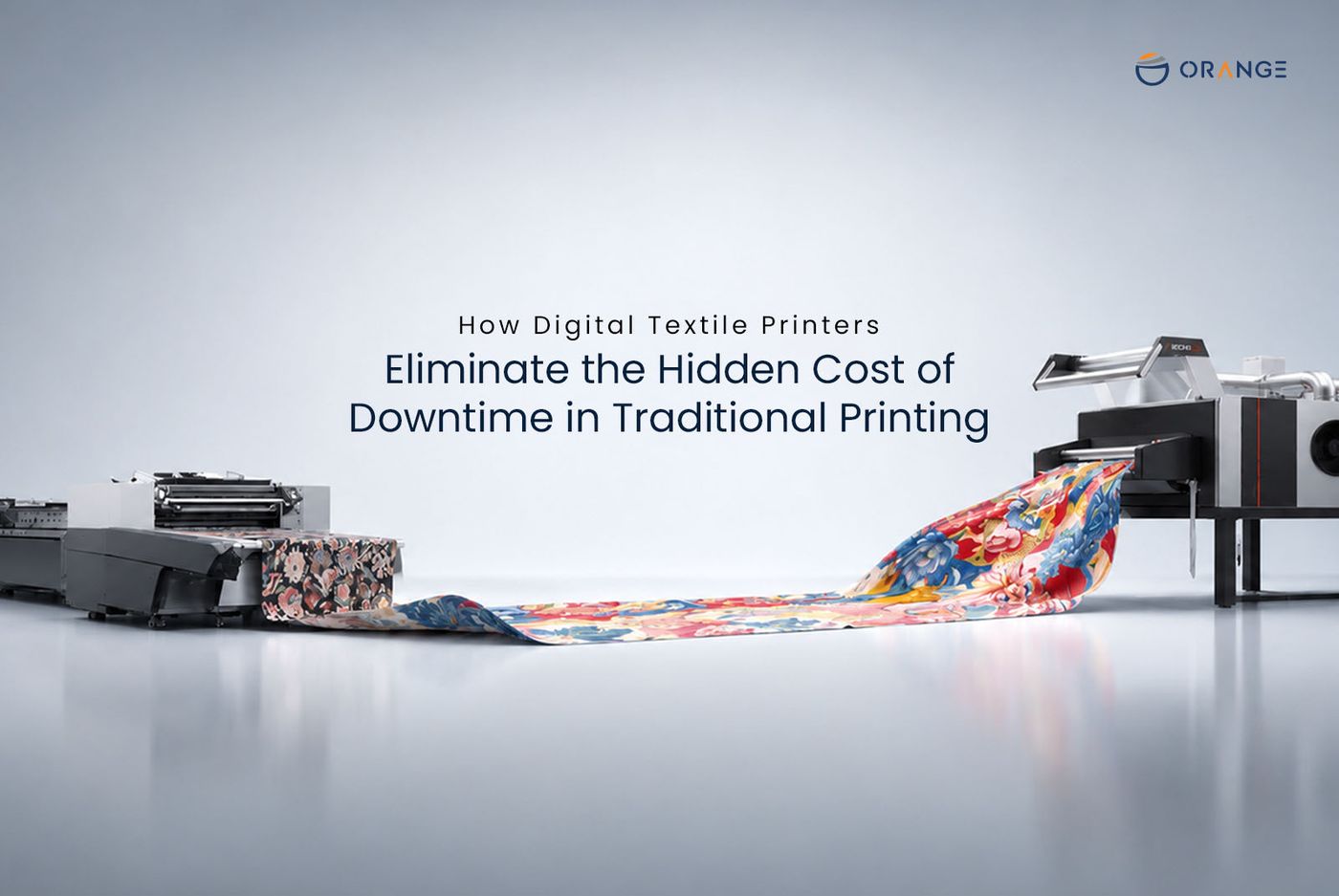
From delayed deliveries and missed export shipments to lost creativity and client trust, downtime in traditional textile printing quietly drains revenue and reputation. This is exactly where digital textile printers are changing the economics of textile production, turning inefficiency into agility.
Traditional Downtime vs. Digital Efficiency
In rotary and screen printing setups, downtime is an everyday reality. Changing screens, aligning patterns, mixing dyes, and cleaning rollers can easily consume four to six hours per shift before a single metre of fabric is printed. Every design change means another setup cycle, more chemical waste, and longer idle times for the team.
Digital textile printers, by contrast, eliminate nearly all of these bottlenecks:
- No screens to prepare or change
- No manual alignment between colours
- Instant design changes from file to fabric in minutes
- Minimal operator dependency for setup
With just-in-time digital workflows, production runs start in minutes, not hours. Manufacturers can print multiple designs in a single shift, reducing idle time by up to 70% and dramatically improving return on machine investment.
In a world where speed and flexibility drive orders, that’s a competitive edge no factory can afford to ignore.
Reliability That Builds Reputation
Buyers and exporters don’t see what happens inside the factory; they only see results. When deliveries are delayed or samples arrive late, trust erodes fast.
Traditional systems, with their mechanical complexity and frequent maintenance cycles, often lead to unpredictable output and schedule disruptions. But digital textile printing machines are engineered for consistent uptime, delivering the reliability that builds confidence among global clients.
Automated maintenance cycles, precision ink systems, and intelligent motion control mean less downtime, stable colour output, and faster order fulfilment even across diverse fabric types.
In an industry where trust and timing decide repeat business, digital printing technology doesn’t just improve productivity; it protects your brand reputation.
Turning Time Into Opportunity
Every hour saved is an opportunity gained.
While traditional systems spend half the day in setup or maintenance, digital textile printers keep printing, enabling faster sampling, short-run customisation, and immediate order switching. That agility means more client acceptance, faster turnaround, and higher profit margins.
Digital fabric printing machines also open doors to high-value segments like fashion sampling, sportswear, and home décor, where small-batch precision and design diversity are key. Manufacturers who’ve embraced this shift aren’t just producing more, they’re growing faster.
Takeaway
Downtime in traditional printing isn’t just wasted time, it’s lost revenue, lost credibility, and lost innovation.
Digital textile printing machines have redefined what efficiency means in textile manufacturing. By eliminating mechanical setup delays, minimising waste, and maximising uptime, they give manufacturers the freedom to print more designs, on more fabrics, with more reliability, all at a lower cost per metre.
In today’s global market, that’s not an upgrade; it’s a necessity.
Ready to Eliminate Downtime From Your Production?
Talk to our team about the right digital textile printer for your business, designed to keep your production moving, shift after shift.